June CryptoGoose (6/27) / Chainlink Thesis
Part one: Short read on current market environment. Part 2: Attempt to better understand Chainlink.

June CryptoGoose (6/27)
At the time I am writing this:
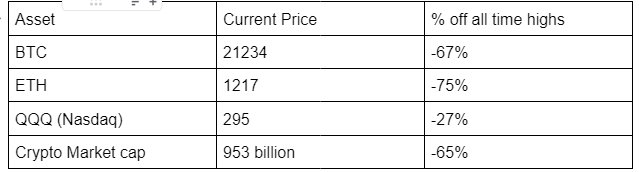
When I pull up the first article I delivered, just over a year ago 6/15/21, on the opening page I wrote -
“Disclaimer: These assets can, and will very likely experience massive drawdowns. Possibly 70% or more. I am more than okay drawing down, and will not be touching my investments for years to come. (It is very early before mass adoption)”
Guess what? It happened. Even though it certainly doesn’t feel good, the thesis has not changed. Those who A. Understand the long term value proposition B. Have capital to deploy and C. Are stepping in to buy are the people in the driver seat.
For those wondering my thoughts - I have not sold anything. I actually have been converting some of my bitcoin into ETH, and have been buying LINK. I will continue to re-allocate most of my BTC into ETH over the next few months, as I personally believe the value proposition for ETH to outweigh BTC long term from these levels.
Remember, prices can most definitely still fall from these levels. For all we know, ETH could be back below 4 digits tomorrow. I have always said, crypto is a very risky asset class. The beta of this sector is insanely high. In bear markets, crypto will continue to get destroyed. In bull markets, it will outperform.
While this bear market unfolds, I am personally continuing to educate myself as much as possible. I consume as many podcasts, YouTube videos, and articles as I can. 1-3 hours almost every day. While this selloff has been very rough, I can’t help but feel very optimistic long term. I am a net buyer of crypto assets and will continue to accumulate on weakness ETH/LINK/DPI holding 5-10 years out.
I hope you enjoy learning about Chainlink. The goal of this paper is for you to understand the basic functions of Chainlink, and the investment thesis. The actual underlying technology is far more complicated and is outside the scope of this article.
-Cryptogoose
Elevator Pitch: Chainlink’s goal is to take real world data, verify, and put it on the blockchain so smart contracts can access the data. A bet on Chainlink is betting on the growth of blockchain usage throughout the world. Chainlink provides the infrastructure that will make this happen.
In this nascent industry, the unfortunate reality is 95%+ of all coins don’t actually solve a real world problem. They are strictly used for speculation. Today, almost every project has grandiose promises of the future value their token brings…but right now they are nothing more than promises.
Chainlink is different.
I am betting on the long term trend of data moving onto the blockchain. Real estate, taxes, the tokenization of virtually every asset, college degrees, insurance, etc. In order to make this reality happen, crypto projects will need to onboard real world data onto the blockchain, and in order to do this - projects will need to use something called oracles.
“Invest in the picks and shovels, not finding the gold”
As of 6/20
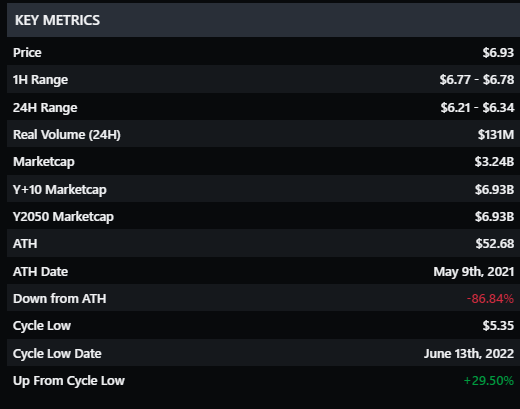
A bet on Chainlink is essentially investing into selling the picks and shovels during the gold rush, not searching for the gold. Chainlink is the infrastructure for all data to inevitably move onto the blockchain via the use of oracles. In order to explain oracles, I want to briefly recap smart contracts.
What is a smart contract?
Link as of 6/20
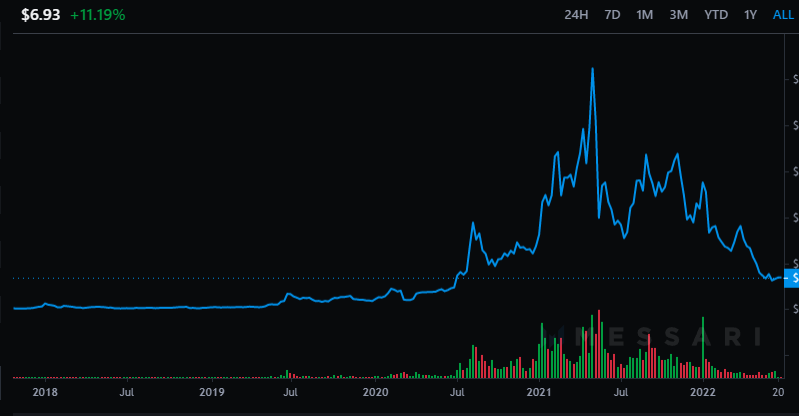
Traditional Smart contracts reference the blockchain to make sure contracts are kept. (i.e. the contract looks at past transactions to keep agreements in check)
For example, let’s assume Alice and Bob want to bet on the outcome of a sports match. Alice bets $20 on team A and Bob bets $20 on team B, with the $40 total held in escrow by a smart contract. The smart contract is programmed to verify the outcome, and pay the correct party.
When the game ends, how does the smart contract know whether to release the funds to Alice or Bob?
Chainlink, using their oracle network, aims to take real life data and integrate them into smart contracts. The oracle technical definition: “an oracle mechanism fetches accurate match outcomes off-chain and delivers it to the blockchain in a secure and reliable manner.” Chainlink aims to create a network where data providers (oracles) are incentivized by payments to provide truthful and reliable data to a blockchain
Oracles are a software that acts as an intermediary helping to create a two way data transfer between smart contracts and the real world.
An oracle is a trusted 3rd party that gives you reliable data from an outside source
Oracles are programs or code that are able to take real world data, and move them on the blockchain.
Real world examples of Oracles:
Adam and Ron each bet $100 on the Texans (Adam) vs Cowboys (Ron). In real life, no escrow is needed. There is a trust relationship here. Adam and Ron are buddies and trust there will be payment.
The trust relationship however, is not scalable. It is unlikely Adam will be able to go onto the internet or a random bar and make the same bet expecting to be paid. So currently, a sports book (MGM, draft kings, etc) plays that role as a market maker, and reestablishes the trust so it can scale throughout the country. (For a % cut) Outsourcing trust, the book holds the money in escrow. Anyone betting can simply go onto ESPN or hundreds of other outlets to verify the score of the game.
In this example, ESPN would be considered the oracle. It doesn’t matter what CBS says, we are trusting ESPN, the oracle. Chainlink is building a network of oracles for smart contracts to operate accurately. So when Adam bets on the Texans, and Ron bets on the cowboys - they both lock up $100 with the smart contract. When the game ends, the smart contract will check with the oracle (in this case - ESPN) and pay out the winner based on the results.
Farming insurance: Imagine you are a farmer, and you want to buy crop insurance. So if there is a fire, or flood - you are protected. An Oracle is needed here to verify if the weather data (temperatures, rain, etc) causes crop damage. If so, they can automate insurance payments.
Let’s you want to purchase drought insurance. If we don't get a certain amount of rain, the insurance will pay out. How do we determine if there’s a drought? You can't just look at 1 rain meter...you will have to use the data from all 10 rain meters scattered on the property.
Look at all 10 rain meters, and depending on the oracle rules it will report the correct answer for payment. If we used data from only one rain meter, a nefarious actor could be pouring water over it in order to manipulate the reading. If that one oracle reports erroneous numbers, they will forfeit their stake and they will lose money.
Stock prices: You could create a token that follows the price of a US stock. Here, investors from any country could be able to invest in the stock without having to jump through international hoops or fill out paperwork. There are oracles through the mirror protocol that make sure the token price trades in parity with the actual stock price, and trades 24/7.
Chainlink is an oracle network. Real world data, moved onto the blockchain.
-Decentralized
-Trustless
-Affordable
Chainlink is a decentralized network of oracles that provide data from off chain sources to onchain sources. It allows smart contracts to access real world information that exists outside the blockchain in a secure manner.
Put simply - Chainlink’s goal is to take real world data, verify it, and put it on the blockchain so smart contracts can access the data.
Chainlink’s smart contracts will replace middlemen with code.
3 examples of middle men:
If you are looking for a place to rent, you hire a broker, who based on your criteria shows you several listings.
Travel agent: They use their data to match you with a vacation itinerary.
Sports betting: Person A bets, the bookie takes the bet and matches you up with Person B/hold the funds in escrow.
How does data get onto the blockchain?
Node operators (oracles) : Lock up money, and want to be a trusted source of data.
Why do node operators want to lock up their money? If the node operator is reporting untruthful data, Chainlink will take their locked money. The locked money incentives the node operators to act in good faith and tell the truth.
Node operators get paid to provide the data. Win win situation. (the actual technology behind it is much more complicated)
John uses a sports betting app to place a bet on the Avalanche winning tonight’s game. Say there are 11 nodes reporting data on this game.
8 nodes report the score as 4-3
3 nodes report the score as 5-1
The Chainlink contract (called the aggregating contract) will look at the reported scores, and take the consensus. So the 8 nodes reporting 4-3 will be selected and the 3 erroneous nodes will be discarded. The contract can use many sources and double check the data multiple times.
You pay Chainlink to find reputable nodes. You then give Chainlink a question to answer. Chainlink aggregates all the data and gives back the correct answer.
From the White paper:
“Decentralized oracle network - DONs. the foundation for long term vision of Chainlink
-oracles bring data from offchain onto blockchains
What is an Oracle?
Oracles are the middlemen that bridge the gap between real-world (off-chain) services and blockchain (on-chain) protocols. Oracles retrieve off-chain data and post this data to the blockchain for smart contract consumption. They also relay messages and instructions from a smart contract to off-chain external systems. In addition, oracles must also ensure that the data that they provide is accurate and resistant to manipulation.
The ideal price oracle should embody the following:
A high-level accuracy – The price oracle values should reflect the current data.
Non-gameable – The oracle should be resistant to manipulation.
Timeliness – The data from the price oracle should provide accurate data on a timely basis, preferably every block.
Decentralized – The oracle price is verified in a decentralized and permissionless system.
Unlike ETH and other base layer chains, oracle tokens aren’t trying to become monies. Their primary value will be derived from fees generated by node operators for supplying information, which relies on the demand for specific off-chain data feeds and the price at which the market is willing to pay.”
Relevant Chainlink information:
Competitors:
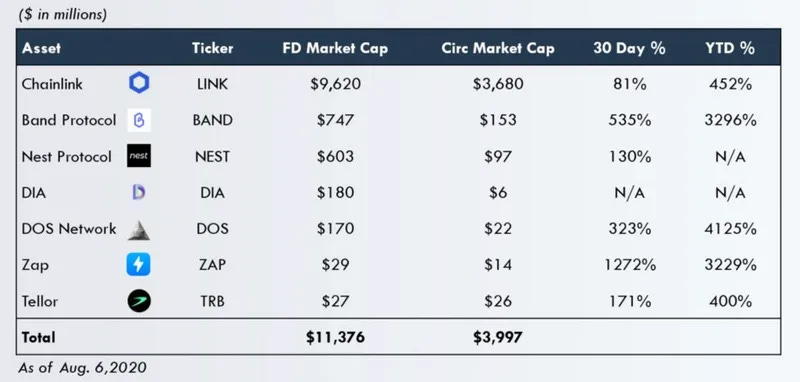
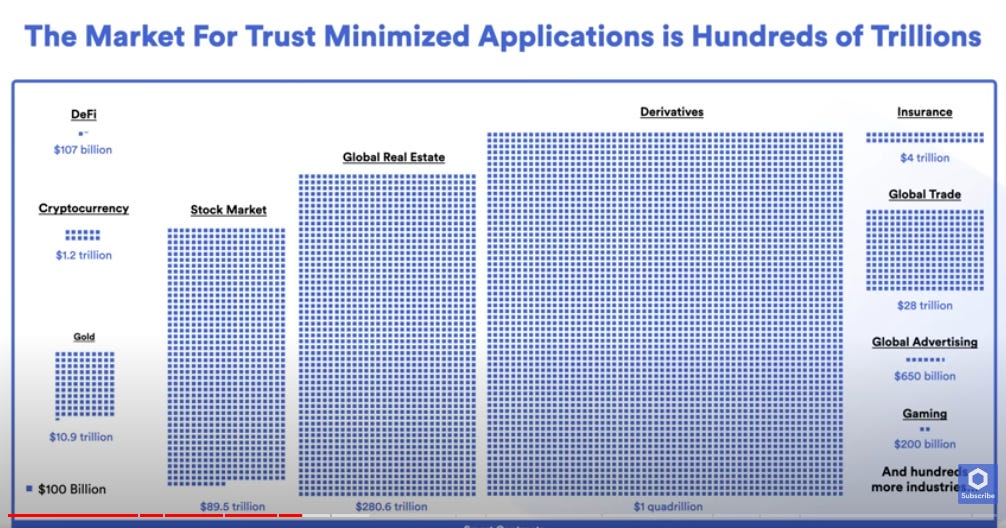
Look at this amazing graphic, illustrating the size of this market. Crazy.
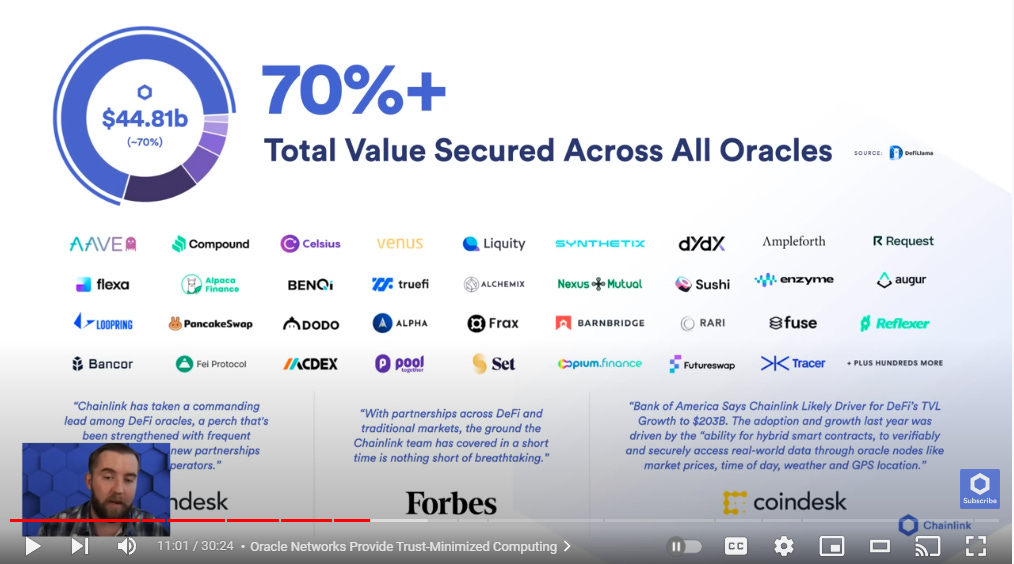
Tracking the amount of data points delivered on chain is a useful way to make sure our thesis remains in play. We need to see this number growing quarter over quarter.
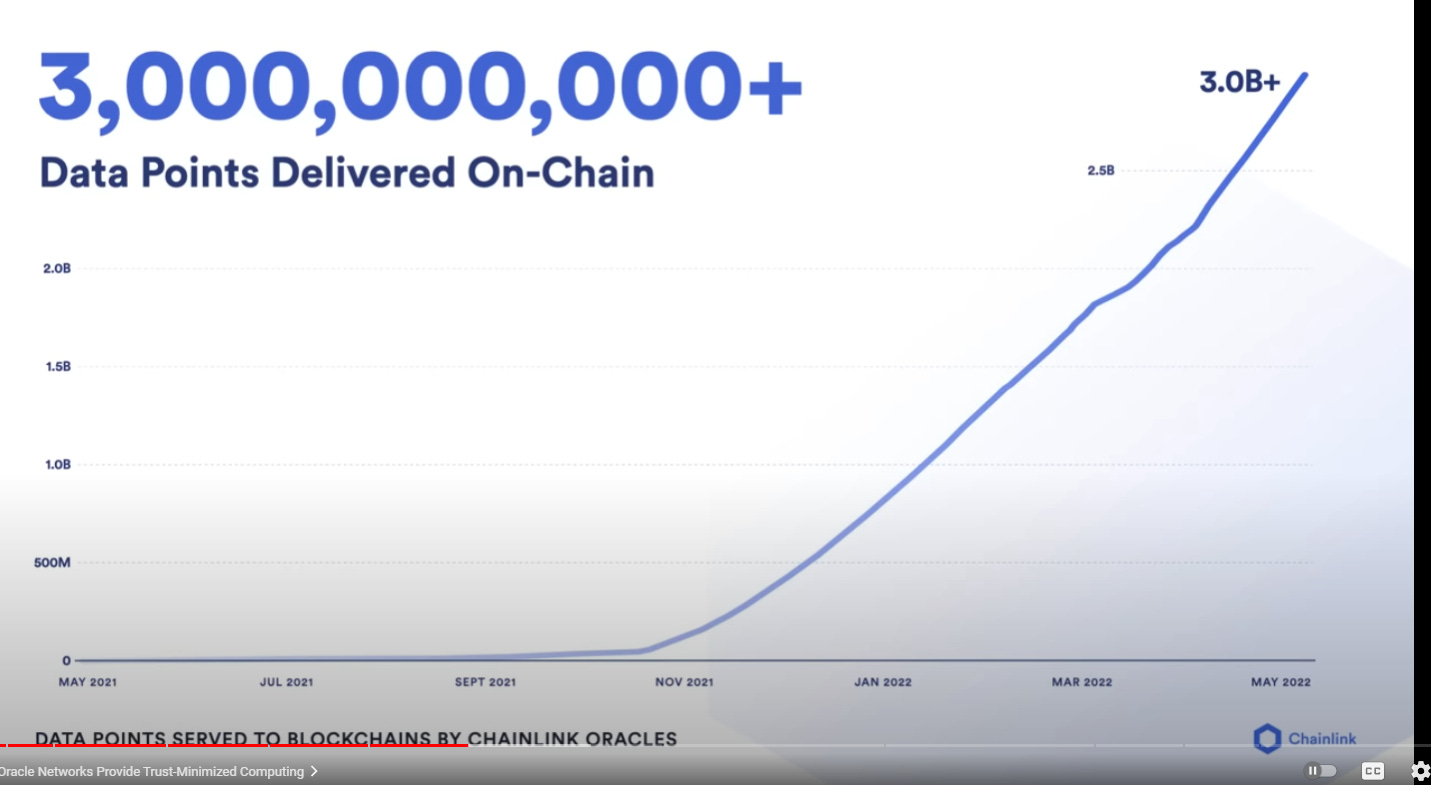
Long term vision of Chainlink (from the founder)
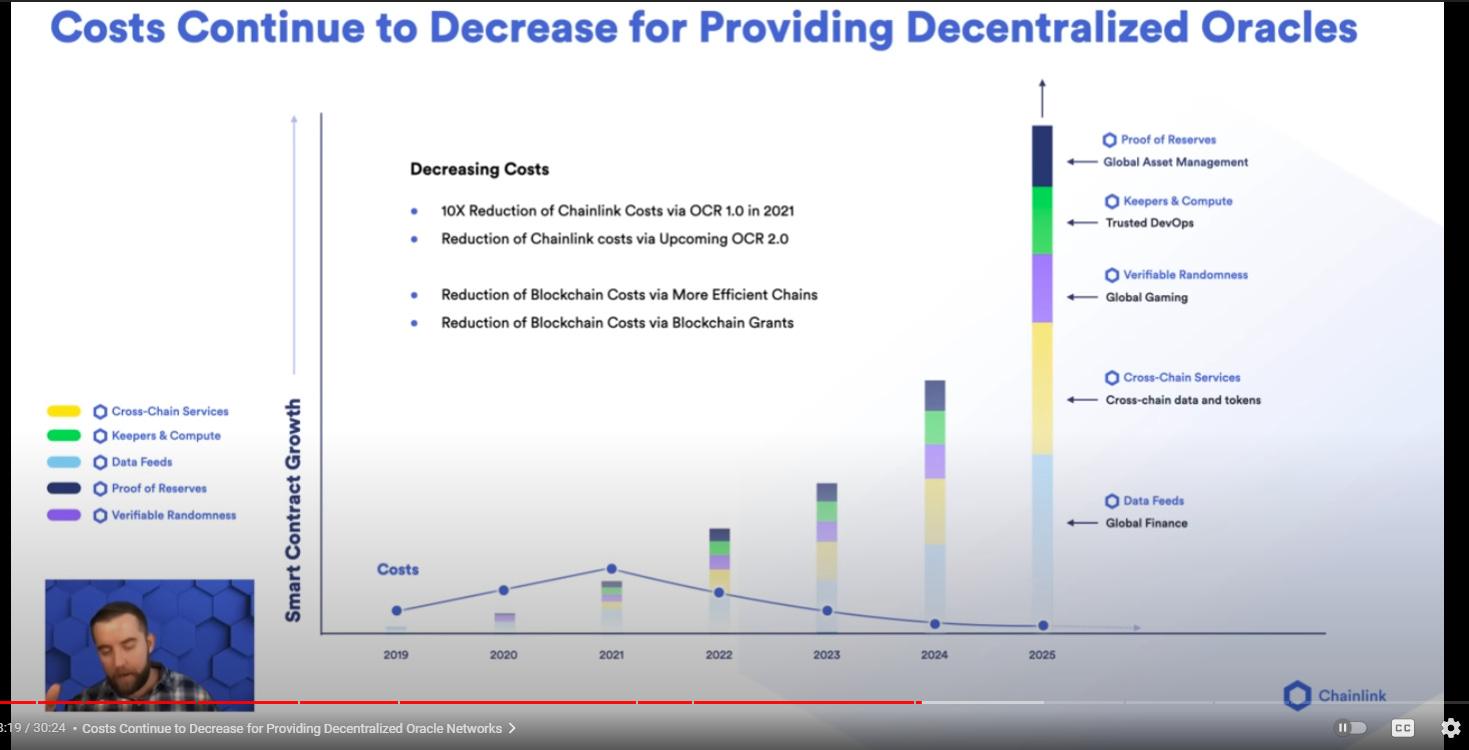
In summary, think of Chainlink as building the railroads between cities. Cities are growing crypto networks (blockchains), and the cargo is real world data. Chainlink is building the railroads (oracle networks) that take real world data and make it possible for smart contracts to access.
In my eyes, a bet on chainlink, is the bet of an exponential growth of more real world data moving onto the blockchain. If you understand this point, you can see the enormous potential ahead of us.
Sources:
https://chain.link/education/blockchain-oracles#what-is-a-blockchain-oracle
youtube.com/watch?v=JkkV66myp5E